
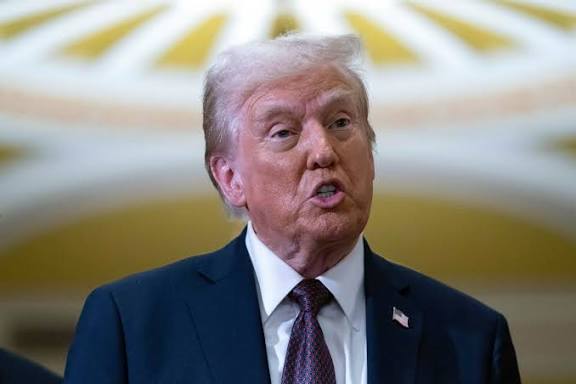
Amid a widening Middle East crisis, U.S. President Donald Trump declared his administration must influence who leads Iran next — a statement that adds geopolitical strain to a region already destabilized by conflict and uncertainty. The remarks, while reported globally, reveal differing editorial lenses that shape public understanding.
What Happened In an interview with Axios on March 5, Trump said he wants a decisive role in choosing Iran’s next Supreme Leader following the death of Ayatollah Ali Khamenei. He dismissed speculation around Mojtaba Khamenei, the late leader’s son, calling him a “lightweight” and “unacceptable,” and drew parallels with U.S. influence in Venezuela’s recent leadership shifts.
The deeper implication is the geopolitical tension between U.S. foreign policy positioning and Iranian sovereignty norms. Trump’s insistence signals a shift from reactive diplomacy to overt influence assertion. In a region where leadership transitions historically trigger internal power struggles and external pressure, such rhetoric could reverberate through already fragile U.S.–Middle East relations.
Advertisement
Iran has not officially named a successor, and the clerical assembly that chooses the Supreme Leader operates largely independently of Western actors. Trump’s comments — while politically resonant — raise questions about diplomatic norms, the limits of executive influence, and the balance between strategic interest and international protocol.
This moment arrives amid ongoing conflict tied to U.S. and Israeli military actions in Iran, escalating regional tensions and reciprocal attacks. Iranian succession has domestic and religious weight; its leader guides both state policy and theocratic oversight. Past transitions, like Ayatollah Khomeini’s succession in 1989, shaped decades of Iranian governance.
As Tehran’s establishment moves toward selecting a new Supreme Leader, the “real test now” is whether global powers recalibrate rhetoric in favor of diplomatic engagement or escalate geopolitical brinkmanship. What comes next may determine not only U.S.–Iran relations, but the wider stability of a region already stretched thin by conflict and mistrust.
You must log in to comment or reply.
Comments