
Questions over Iran’s leadership are emerging at a critical moment in the escalating conflict with Israel and the United States.
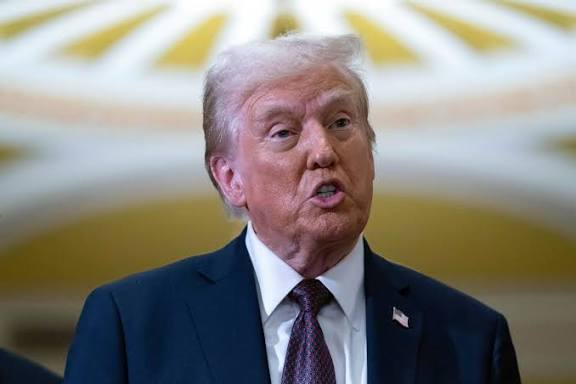
U.S. President Donald Trump says he believes Iran’s newly appointed Supreme Leader Mojtaba Khamenei is still alive but likely injured, after reports suggested he was hurt during the strike that killed his father at the start of the war.
Speaking during an interview on Fox News’ The Brian Kilmeade Show, Trump said he believes Mojtaba Khamenei survived the attack but may be seriously affected.
“I think he probably is alive. I think he is damaged, but I think he’s probably alive in some form,” Trump said.
Advertisement
Khamenei has not appeared publicly since Iran’s powerful clerical assembly selected him as the country’s new Supreme Leader earlier this week, following the death of his father, Ali Khamenei, in the first wave of U.S.–Israeli strikes that launched the current war on February 28.
His initial message to the Iranian public was instead delivered by a television presenter, a detail that has intensified speculation about his condition.
In that message, Mojtaba Khamenei vowed that Iran would keep the Strait of Hormuz closed and warned neighboring states hosting U.S. military bases that they could become targets if they continue supporting Washington’s operations.
The strategic waterway carries roughly one-fifth of the world’s oil supply, meaning any disruption could rapidly ripple across global energy markets.
While many outlets highlighted Trump’s remarks about the leader’s health, several reports have focused more heavily on the economic implications of Iran’s threat to restrict shipping in the strait.
The conflict has now entered its second week, with missile exchanges between Iran and Israel continuing and attacks reported in Gulf states hosting American military facilities.
Advertisement
Thousands have reportedly been killed since the fighting began, and energy markets have reacted sharply amid fears the confrontation could spread across the Middle East.
Beyond the immediate military escalation, uncertainty over Iran’s leadership adds another layer of instability. A leader who has yet to appear publicly during wartime raises questions about decision-making inside Tehran at a moment when strategic miscalculations could have global consequences.
You must log in to comment or reply.
Comments