
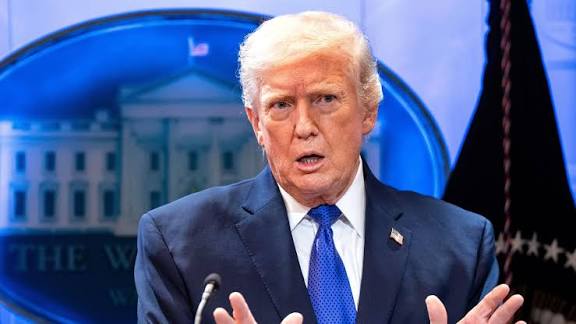
U.S. President Donald Trump says the war with Iran could end soon because American and allied forces have already destroyed most of the country’s military targets.
Yet even as the White House signals the campaign may be nearing completion, Israeli officials and Iranian commanders are warning that the conflict may be far from over.
President Donald Trump said Wednesday that U.S. forces have already struck most of their intended targets inside Iran, suggesting the war could conclude in the near future.
In a brief interview with Axios, Trump said there is “practically nothing left to target” and that the conflict could end whenever he decides.
“Any time I want it to end, it will end,” the U.S. leader said, describing the military campaign as ahead of schedule and more destructive to Iranian capabilities than initially expected.
Advertisement
The war, launched roughly two weeks ago as a coordinated U.S.–Israeli operation against Iran’s military infrastructure and strategic assets, has included widespread strikes on missile bases, naval facilities and other military targets.
While Trump’s remarks suggest the operation may soon wind down, other officials involved in the campaign are projecting a different timeline.
Israeli Defence Minister Israel Katz said the offensive would continue “without any time limit” until all military objectives are achieved.
U.S. military leadership has also emphasized that the mission remains focused on neutralizing Iran’s ability to threaten regional shipping lanes and project military power, particularly around the Strait of Hormuz.
That divergence in tone highlights a growing uncertainty over what the final objective of the war actually is—whether the goal is limited military degradation or a deeper strategic transformation inside Iran.
Beyond the battlefield, the conflict is beginning to generate pressure on the White House.
Trump faces criticism at home over the economic fallout from the war, including concerns about oil supply disruptions and rising global energy prices.
Iran has also signaled its willingness to escalate by threatening shipping routes in the Strait of Hormuz, one of the world’s most critical oil chokepoints.
Intelligence assessments recently suggested Tehran had begun deploying naval mines in the area, prompting U.S. strikes on Iranian boats believed to be involved in the operation.
At the same time, the conflict is becoming a political issue in the United States as lawmakers prepare for upcoming congressional elections. Analysts say the White House may be under increasing pressure to avoid a prolonged Middle East war.
Advertisement
Trump’s assertion that little remains to be targeted reflects the scale of the early bombing campaign. Some reports indicate thousands of strikes have already been conducted against Iranian military infrastructure since the operation began.
However, modern warfare rarely ends simply because fixed military targets are destroyed.
Iran still retains several forms of asymmetric leverage, including regional proxy groups, missile stockpiles and the ability to disrupt maritime traffic in the Gulf.
That means the conflict’s trajectory may depend less on remaining targets and more on whether both sides decide the strategic costs of continuing the fight are too high.
You must log in to comment or reply.
Comments