
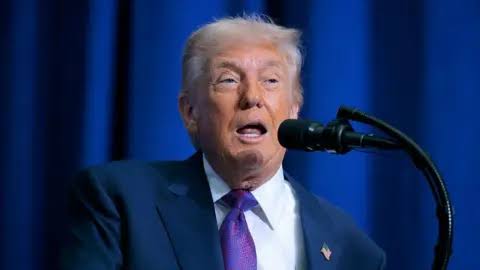
As the four-week-old Middle East war intensifies, President Donald Trump issued a stark warning to Iran, urging immediate engagement in peace talks before the situation spirals beyond control. While Tehran publicly denies formal negotiations, behind-the-scenes diplomacy through Pakistan and other regional intermediaries continues to shape the fragile prospects for resolution. The stakes extend far beyond military confrontation, with regional stability, global energy markets, and diplomatic credibility all hanging in the balance.
On March 26, 2026, Trump signaled that the United States expects Iran to take the proposed 15-point peace plan seriously, or risk irreversible military consequences. Israel confirmed it had targeted and killed the Iranian Revolutionary Guards’ naval commander, Alireza Tangsiri, whom it accused of restricting passage through the strategic Strait of Hormuz. Iran, meanwhile, insisted it had not entered into formal negotiations with the US, although messages are reportedly being relayed through Pakistan, Turkey, Egypt, and Gulf Cooperation Council states.
While Punch highlighted Trump’s warning and Iran’s public denial, Reuters and The Guardian framed the story with greater attention to the complex regional diplomacy. Reuters emphasized Pakistan’s intermediary role and the uncertainty surrounding the legitimacy of indirect talks, while The Guardian noted the broader economic and military ramifications, particularly disruptions to shipping routes and oil markets. Both, however, underplayed the domestic political pressures on the US administration and the economic implications for emerging markets heavily reliant on Gulf energy.
Advertisement
The deeper issue is that mixed signals from Washington and Tehran have created both operational and strategic uncertainty. Global energy markets reacted sharply to the conflict, with crude oil prices spiking as analysts reassess the risks of prolonged disruption in the Gulf. Civilian populations in Israel, Iran, and Gulf states are increasingly exposed to missile and drone attacks, while the international community’s attempt at mediation struggles against the backdrop of escalating military actions. The crisis illustrates the thin line between diplomatic maneuvering and full-scale regional escalation, highlighting the fragility of conflict resolution in highly militarized theaters.
Historically, similar proxy tensions have erupted in 2019 and 2023, causing sudden spikes in oil prices and forcing regional actors to balance military objectives with economic realities. Current trends suggest that even minor miscalculations could amplify both economic volatility and humanitarian risk, emphasizing the critical role of neutral intermediaries in sustaining dialogue.
The bigger risk is that without credible, transparent negotiations, the conflict could further entrench regional hostilities, threaten global energy security, and undermine confidence in diplomatic institutions. What unfolds in the coming days will test not only the commitment of Iran and the US to de-escalation but also the capacity of intermediary states to stabilize a crisis with far-reaching consequences.
You must log in to comment or reply.
Comments