
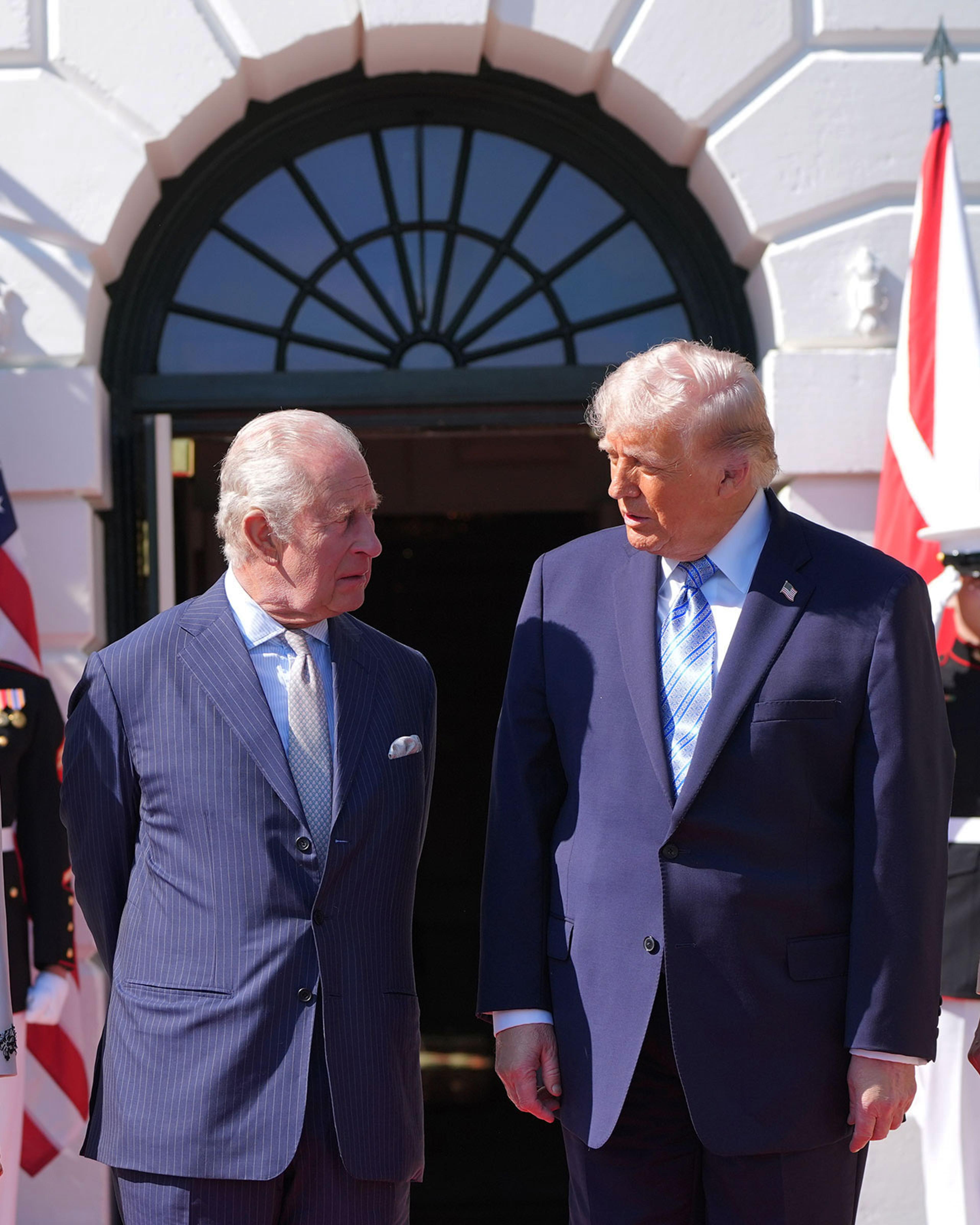
A carefully choreographed state visit at the White House has put the US–UK alliance on display—but beneath the ceremony lies a growing strategic divide. As Donald Trump welcomed King Charles III, both sides signalled unity while quietly navigating one of the most strained moments in transatlantic relations in recent years.
A Ceremonial Reset at a Fragile Moment
On April 28, 2026, Washington hosted a full state reception for King Charles III, complete with a 21-gun salute, military flypast, and formal troop inspection. Standing beside the British monarch and Queen Camilla, President Trump declared that Americans have had “no closer friends than the British,” reaffirming what he called the enduring “special relationship.”
The tone marked a sharp contrast from recent weeks, when Trump openly criticised the UK government for refusing to support US military actions linked to escalating tensions with Iran. At the ceremony, however, he struck a reconciliatory note, praising joint military history and adding, “nobody fought better together.”
The visit also carries symbolic timing, coinciding with the 250th anniversary of American independence, underscoring how relations have evolved from colonial conflict to strategic alliance.
The immediate tension stems from Britain’s refusal to join US military action related to Iran—a decision that has triggered rare public friction between the allies.
Trump has framed the UK’s position as a failure of support, while London has taken a more cautious approach, reflecting domestic political constraints and broader European concerns about escalation.
Advertisement
In his upcoming address to Congress, King Charles is expected to stress shared democratic values, with lines emphasising that “time and again, our two countries have found ways to come together.” The language reflects a diplomatic balancing act—acknowledging disagreement without deepening it.
Yet the deeper issue is not just one policy dispute. It is whether the US and UK still align on how global conflicts should be handled, particularly in an increasingly volatile geopolitical environment.
The elaborate optics—military honours, historical reenactments, and state dinners—are designed to reinforce continuity. But they cannot fully mask widening differences in policy direction.
Recent tensions extend beyond Iran:
• Diverging approaches to military engagement and global security
• Disagreements on energy and economic policy
• Public criticism from Washington directed at UK leadership
That framing leaves out a key reality: the “special relationship” is no longer defined solely by shared history, but increasingly by how both countries respond to modern crises.
While public ceremonies emphasise unity, much of the real diplomacy is unfolding privately. Meetings between Trump and King Charles are taking place behind closed doors, reflecting sensitivity around unresolved disagreements.
The monarchy’s involvement is significant. Unlike elected leaders, King Charles can engage in diplomacy without direct political confrontation—providing a channel for dialogue when official positions diverge.
His address to Congress, echoing Queen Elizabeth II’s 1991 speech, is expected to serve as a stabilising moment. But unlike that earlier period of alignment, today’s context is far more fractured.
The implications extend well beyond US–UK relations. The Iran conflict has already begun influencing global oil markets, shipping routes, and security alliances, making alignment between Western powers more critical.
Advertisement
For countries like Nigeria, shifts in global energy dynamics can directly affect:
• Fuel prices
• Inflation levels
• Foreign exchange pressures
A prolonged divergence between the US and UK could weaken coordinated responses to global crises—creating ripple effects across emerging economies.
The concerning situation now is whether this high-profile display of unity can translate into coordinated action on global security challenges. As tensions over Iran persist, the durability of the US–UK alliance will depend less on ceremonial reaffirmations and more on whether both sides can bridge their strategic differences without fracturing a partnership that has long shaped global stability.
You must log in to comment or reply.
Comments