
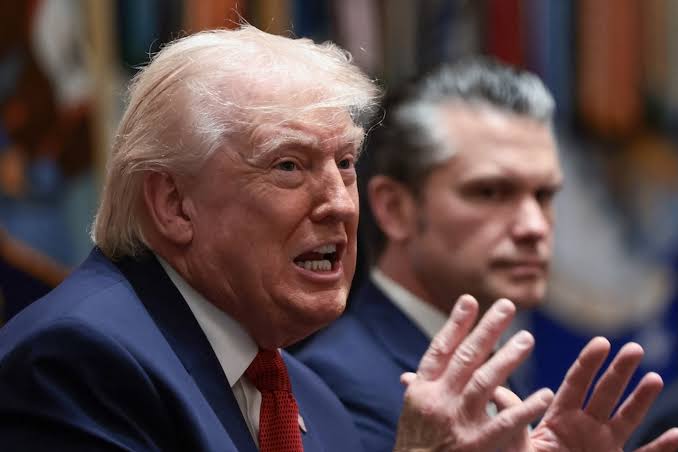
As the U.S.–Israel military campaign against Iran enters its 30th day, President Donald Trump’s assertion that Tehran has undergone “regime change” has ignited intense debate — even among U.S. and allied leaders. The reality on the ground, however, reflects a far more complex and unresolved conflict with profound geopolitical and economic consequences.
On February 28, 2026, the United States and Israel launched a joint military offensive against Iran, targeting military infrastructure, nuclear sites, and political leadership figures — including Supreme Leader Ali Khamenei. Despite the killing of Khamenei and some senior officials, Iran’s political system has not collapsed, and his son Mojtaba now serves as the country’s top leader. President Trump told reporters he believed this shift amounted to “regime change,” even while insisting diplomatic engagement continues.
The conflict has reverberated beyond Tehran: the Strait of Hormuz — a critical chokepoint for roughly 20% of global oil and gas shipments — remains effectively closed, driving energy market turmoil and pushing prices sharply higher.
Advertisement
Trump’s use of “regime change” is as much a political framing as a factual assessment. Militarily, Iran’s leadership has been undoubtedly disrupted, but the regime’s institutional foundations, security apparatus, and domestic governance structures remain intact. International leaders — including German Chancellor Friedrich Merz — openly argue that regime overthrow is unlikely, noting historical parallels where overseas intervention failed to topple entrenched governments.
On the battlefield, extensive U.S. and Israeli strikes have degraded Iranian missile infrastructure and command systems, yet Iran continues to launch missiles and drones — signalling resilience rather than collapse.
Though geographically distant from West Africa, Nigeria’s economy is indirectly feeling the shockwaves of the conflict. Prolonged disruption of the Strait of Hormuz threatens crude oil supply chains that underpin global energy markets. As oil prices climb, Nigerian refineries — already strained — may face higher import costs, potentially feeding inflation and squeezing transport and household budgets. (Economic context inferred from global oil price risks).
The 2026 Iran war did not erupt suddenly; it followed months of failed nuclear talks, increasing militarization in the Middle East, and deep mistrust between Tehran, Washington, and Tel Aviv. Prior flare‑ups in 2024 and 2025 — including missile exchanges and regional proxy conflicts — set the stage for this escalation.
Advertisement
Even with devastating strikes, scholars and analysts caution that lasting political change rarely results solely from air campaigns. Experience from past conflicts (e.g., Afghanistan and Iraq) shows that removing leaders does not automatically translate into systemic change — particularly in nations with entrenched political structures and powerful security institutions.
You must log in to comment or reply.
Comments