
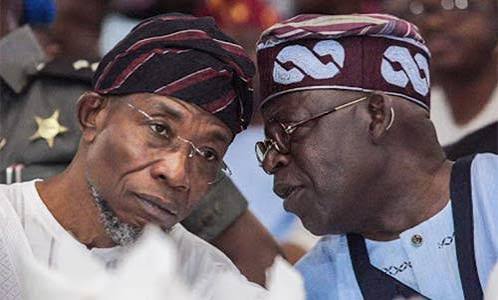
Nigeria’s evolving political alliances took another sharp turn this week as a past endorsement of President Bola Ahmed Tinubu by former ally Rauf Aregbesola resurfaced—just as he publicly denounced the same administration. The contrast is more than symbolic; it reflects a widening fracture that could shape opposition politics ahead of 2027.
On April 14, 2026, Aregbesola, now a leading figure in the African Democratic Congress (ADC), delivered a strongly worded speech at the party’s convention in Abuja. He sharply criticized the Tinubu administration’s “Renewed Hope” agenda and urged Nigerians to resist its continuation.
Almost immediately, a 2017 social media post resurfaced showing Aregbesola praising Tinubu’s leadership and crediting him for shaping his political career, particularly during their time in Lagos governance.
The resurfaced statement quickly gained traction online, amplifying perceptions of a dramatic political reversal.
Beyond the headline clash, this episode reveals a more strategic realignment within Nigeria’s political landscape.
Advertisement
Aregbesola’s criticism is not occurring in isolation. Since 2025, he has increasingly aligned with opposition figures, including Atiku Abubakar, positioning himself within a broader coalition seeking to challenge the ruling structure in the next election cycle.
Yet the deeper issue is not simply personal fallout—it is about control of political structures and voter narratives ahead of 2027.
What makes this more complex is Aregbesola’s historical role within Tinubu’s political network. As a former Lagos commissioner and later governor of Osun State, he was once considered part of the inner circle that built the political machinery now dominating national leadership.
That framing leaves out a critical point: Nigerian political alliances have historically been fluid, often shaped by regional interests, succession battles, and electoral strategy rather than ideological consistency.
The rift between Aregbesola and Tinubu traces back to internal conflicts in Osun State, particularly around the 2022 governorship election. The defeat of former governor Gboyega Oyetola by Ademola Adeleke marked a turning point, weakening the cohesion of their political bloc.
Historically, Nigeria has seen similar political reversals:
• In the lead-up to the 2015 elections, major figures switched alliances, reshaping national outcomes
• Internal party disputes have repeatedly triggered the rise of opposition coalitions
Advertisement
Current economic pressures—rising inflation, currency instability, and cost-of-living concerns—are also creating fertile ground for opposition narratives to gain traction, making statements like Aregbesola’s more politically consequential.
The ultimate concern now is whether this rhetoric translates into a cohesive opposition strategy or remains fragmented political dissent.
While the resurfaced tweet highlights personal contradiction, the bigger risk for the ruling establishment lies in elite fragmentation within its former power base. If figures like Aregbesola successfully mobilize alternative platforms, the 2027 election could become more competitive than expected.
You must log in to comment or reply.
Comments