
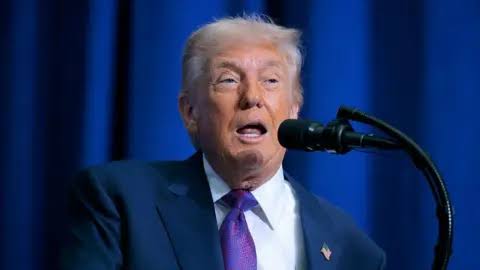
 Tensions in the Middle East escalated sharply after Donald Trump issued a 48-hour ultimatum to Iran, demanding the reopening of the Strait of Hormuz, one of the world’s most critical oil shipping routes.
The warning came as Iranian missiles struck southern Israel, injuring more than 100 people and raising fears that a regional confrontation could spill further into global energy markets.
The administration of Donald Trump has warned Iran that it has 48 hours to fully reopen the Strait of Hormuz to international shipping or face direct strikes on its energy infrastructure.
In a message posted on Truth Social, Trump said the United States would “hit and obliterate” Iranian power plants — beginning with the country’s largest facilities — if the passage remains blocked beyond the deadline.
The ultimatum arrives at a delicate moment in the conflict. Only a day earlier, Trump had suggested the United States might begin scaling down military operations after weeks of hostilities involving Iran, Israel, and US forces across the region.
However, the strategic choke point at the mouth of the Persian Gulf has effectively been closed, disrupting oil shipments and heightening global economic anxiety.
Hours before the ultimatum was issued, Iranian missiles struck towns in southern Israel, marking one of the most damaging attacks since the war began.
Advertisement
Emergency services reported dozens of casualties in the towns of Arad and Dimona, where buildings were heavily damaged.
The strike near Dimona drew particular attention. The desert city hosts a facility widely believed by analysts to be connected to Israel’s undeclared nuclear programme — a detail that has long shaped the region’s strategic balance.
Israeli Prime Minister Benjamin Netanyahu vowed retaliation, promising that Israeli forces would respond “on all fronts.” Within hours, Israeli aircraft launched fresh strikes targeting locations in Tehran.
Officials in Iran responded quickly to the American warning.
Foreign Minister Abbas Araghchi said Tehran had restricted passage through the strait only for vessels belonging to countries participating in attacks against Iran.
Military officials went further, warning that any strikes on Iranian energy infrastructure would trigger retaliation against facilities linked to the United States and its regional allies.
The threat reflects how rapidly the confrontation has expanded beyond bilateral tensions.
Iranian forces have already launched missile and drone attacks across the region, including an attempted long-range strike targeting the US-UK military base on Diego Garcia in the Indian Ocean.
Although the attack was unsuccessful, analysts noted that such an operation would have marked one of Iran’s longest-range missile attempts to date.
Beyond the battlefield, the crisis has immediate implications for the global economy.
The Strait of Hormuz carries roughly 20 percent of the world’s oil supply, making it one of the most strategically important waterways on the planet.
Energy markets reacted quickly to the disruption, with Brent crude prices rising above $105 per barrel amid concerns that prolonged closure could trigger a broader supply shock.
Several governments — including those of France, Germany, Italy, and South Korea — issued a joint statement condemning what they described as the “de facto closure” of the waterway.
Advertisement
Their statement signalled a growing international push to ensure safe passage through the strait, even as Washington has criticised some NATO allies for what Trump described as insufficient support in securing the route.
Early expectations in Washington suggested that heavy bombardment might significantly weaken Iran’s military response capability. Yet weeks into the confrontation, Iranian missile and drone attacks continue across the region.
Security analysts say this resilience complicates any attempt to predict the trajectory of the war.
Political uncertainty within Iran has added another layer of unpredictability. The country recently saw leadership upheaval following the death of long-time supreme leader Ali Khamenei, with his son Mojtaba Khamenei emerging as the new leader earlier this month.
Despite the turmoil, Iran’s military response suggests that command structures remain operational.
You must log in to comment or reply.
Comments