
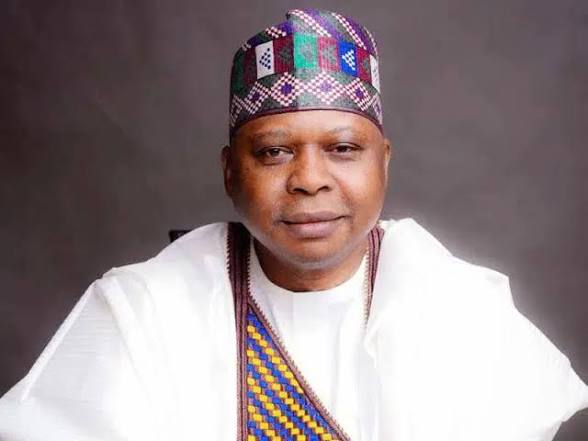
A Federal Capital Territory (FCT) High Court’s decision to issue an arrest order against a factional leader of Nigeria’s main opposition party has deepened political fault lines and raised urgent questions about legal accountability, party unity, and democratic credibility ahead of the 2027 general elections.
Kabiru Tanimu Turaki’s absence in court — and the bench warrant that followed — is not merely a procedural failure. It underscores how legal and political disputes are colliding within the Peoples Democratic Party (PDP) at a moment when cohesion could determine its capacity to challenge the ruling party.
On March 26, 2026, the FCT High Court, presided over by Justice U.P. Kekemeke, issued a bench warrant for the arrest of Kabiru Tanimu Turaki, a factional national chairman of the PDP, after he failed to appear for his scheduled hearing. The case, filed by the Inspector‑General of Police (IGP), stems from a one‑count charge alleging Turaki provided false information to police in a petition from October 2022 — a case long in the background but now thrust into the spotlight with legal enforcement.
Justice Kekemeke rejected the defense’s rationale for absence and moved to compel Turaki’s attendance, signaling the court’s impatience with procedural delays.
Advertisement
At face value, a court ordering the arrest of a political party leader for failing to appear may seem like strict procedural enforcement. Yet, the implications run deeper:
• Political Fragmentation: The PDP has been embroiled in factional disputes for years, with rival leadership groups claiming legitimacy. The legal pressure on Turaki layers judicial intervention over internal party conflict, potentially weakening the party’s national positioning.
• Electoral Stakes: With the 2027 general elections approaching, a divided opposition is less equipped to mount an effective challenge. Nigeria’s electorate — particularly in swing states like Lagos, Rivers, and Kano — is watching whether the PDP can present a united front.
• Rule of Law vs. Political Weaponization: Legal accountability is foundational to democratic norms. However, when legal actions intersect with political leadership disputes, they risk being perceived as tools of political control, undermining trust in institutions unless handled transparently and equitably.
That tension — between necessary legal discipline and political optics — is precisely what makes this development more consequential than a simple courtroom absence.
This isn’t the first time Nigeria’s judiciary has intersected with high‑level political contention. In previous cycles, legal battles over party leadership and candidate eligibility have shaped nomination outcomes and voter perception. The PDP’s internal contestations since 2022 have repeatedly surfaced in national discourse, but court enforcement adds a new layer of urgency.
Advertisement
According to political analysts, internal divisions within major parties historically correlate with lower electoral performance in national polls — an insight that places this legal episode within a broader pattern that could reverberate through 2026 and into 2027.
The PDP now faces the challenge of reconciling its internal divisions, while Turaki’s legal situation could either spark meaningful party reform or further entrench factional mistrust. Against the backdrop of Nigeria’s broader governance challenges — including economic pressures, security concerns, and public confidence in institutions — this episode goes beyond a simple news story, serving as a measure of opposition resilience and the state of democratic practice. Attention is focused on whether Turaki will appear in court as ordered, how the PDP leadership responds both publicly and institutionally, and the broader implications for party unity as Nigeria approaches a pivotal election year.
You must log in to comment or reply.
Comments