
The latest attack in Plateau State has once again drawn international attention to Nigeria’s worsening security crisis, but this time the debate is extending beyond local violence into foreign policy and religious freedom concerns.
As mourners gathered to bury victims of an earlier assault in Barkin Ladi Local Government Area, gunmen reportedly opened fire on the crowd, deepening fears that rural communities in Plateau remain dangerously exposed despite repeated warnings and military operations.
On Wednesday, residents of Fan District in Barkin Ladi, Plateau State, came under attack while preparing graves for victims killed in earlier violence within the community. Eyewitnesses said armed men emerged from surrounding hills and began shooting indiscriminately at mourners attending a mass burial.
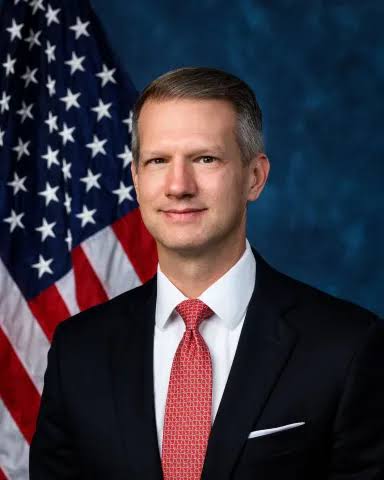
The incident triggered reactions both inside and outside Nigeria, including from United States Congressman Riley Moore, who called on the administration of President Donald Trump to take what he described as “forceful action” to protect Christians in Nigeria.
“When I visited Nigeria, the government responded swiftly to quell a coup in Benin,” Moore said while referencing Nigeria’s military intervention in the neighbouring West African country in late 2025.
“Nigeria’s willingness to step in to stop a violent attack in another country, while they stand by as their own Christian citizens are brutalised, makes these absolutely horrific scenes unfolding in Plateau State all the more unconscionable,” he added.
However, a closer look at coverage from multiple Nigerian and international platforms shows significant differences in how the story is being framed.
Advertisement
While several Nigerian newspapers focused primarily on the attack itself, casualty fears, and eyewitness accounts from Barkin Ladi, some foreign conservative commentators and advocacy groups pushed a stronger narrative describing the violence as part of an ongoing “Christian genocide” in Nigeria.
That framing remains highly disputed.
The Nigerian government has repeatedly rejected accusations that Christians are being systematically targeted for extermination, arguing instead that violence in parts of the Middle Belt is driven by a complicated mix of communal tensions, land disputes, armed banditry, insurgency, and retaliatory attacks affecting both Muslims and Christians.
Yet the deeper issue is that Plateau State has become one of the country’s most persistent flashpoints, where cycles of reprisal attacks continue despite repeated promises of improved security.
Eyewitness accounts from the latest incident painted a chaotic picture. Journalist Masara Kim, who was reportedly present during the burial, said the attackers struck while mourners were still digging graves.
“There is an ongoing massive attack on communities south of Jos. More than five communities are under simultaneous assault,” he said.
Kim added that residents fled for safety as gunfire erupted around the burial site.
Beyond the political statements coming from Washington, the incident exposes a broader challenge for Nigerian authorities: the growing perception that rural communities receive delayed protection despite intelligence warnings and recurring patterns of violence.
What makes this more complex is the international dimension now entering Nigeria’s domestic security conversation.
In recent years, some American lawmakers and religious advocacy organisations have increased pressure on Washington to classify Nigeria more aggressively in reports concerning religious persecution. Similar debates intensified during previous administrations when Nigeria was temporarily designated as a Country of Particular Concern by the United States over religious violence concerns.
However, security analysts have warned against oversimplifying the crisis strictly through a religious lens.
Several studies on Plateau violence show that conflicts in the region are often tied to disputes over grazing routes, land ownership, ethnic rivalries, economic decline, displacement, and the proliferation of armed groups. Religion frequently overlaps with those tensions, making the crisis even harder to resolve.
Advertisement
Nigeria has experienced repeated outbreaks of deadly violence in Plateau over the past two decades, including major attacks in Jos, Riyom, Mangu, and Barkin Ladi. Thousands of people have been displaced during different waves of unrest, with farming communities among the hardest hit.
The economic consequences are also becoming harder to ignore.
Agricultural production in several parts of Plateau has suffered from insecurity, while rural displacement continues to disrupt food supply chains across parts of North-Central Nigeria. Analysts warn that prolonged instability in farming regions could worsen inflation pressures already affecting household food prices nationwide.
Beyond the official statements, the latest attack also highlights the growing frustration among local residents who believe security responses often arrive after communities have already suffered casualties.
The real test now is whether Nigerian authorities can prevent another cycle of retaliation and restore confidence in vulnerable communities already living under constant fear.
For international observers, the Plateau violence is increasingly becoming a symbol of Nigeria’s broader struggle to contain insecurity across multiple regions at the same time. What authorities do next may shape not only local stability in Plateau but also how Nigeria’s security situation is perceived globally in the months ahead.
You must log in to comment or reply.
Comments