
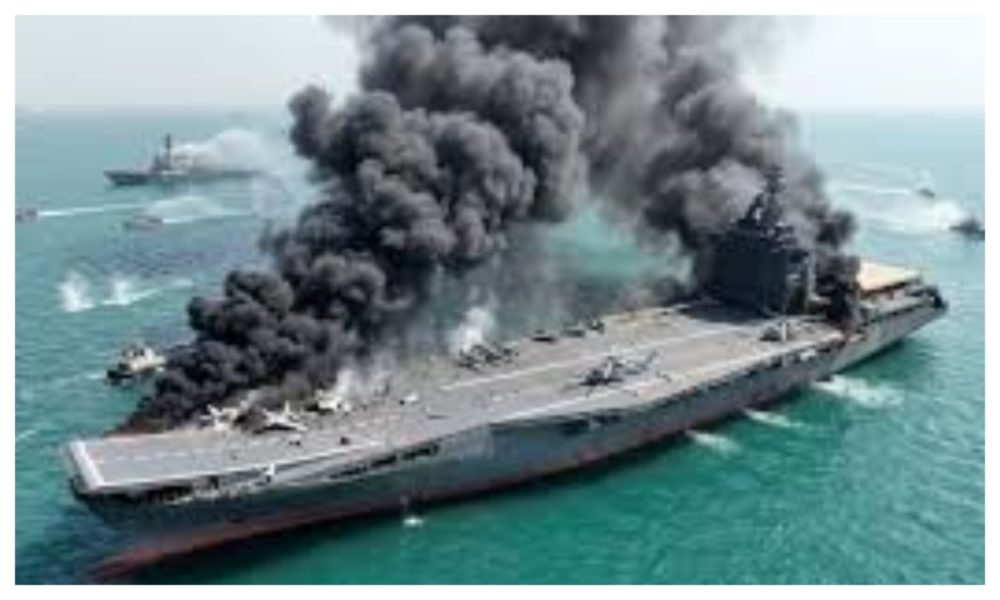
The US military bombed an Iranian drone carrier on Thursday, setting the vessel ablaze and signaling a sharp escalation in the region’s rapidly intensifying conflict. This move follows Iran’s missile barrage against Israel earlier this week, marking a new chapter in the unfolding US‑Iran‑Israel confrontation.
According to CENTCOM Commander Adm. Brad Cooper, the targeted ship, IRIS Shahid Bagheri, roughly the size of a World War II aircraft carrier, was set on fire during the strike. The vessel is a former container ship converted to deploy drones, highlighting Tehran’s unconventional naval tactics. Cooper also confirmed that US forces have struck more than 30 Iranian naval vessels and nearly 200 targets deep inside Iran since the conflict began, effectively degrading Iran’s naval and missile capabilities.
Beyond the tactical success, the strike illustrates the US commitment to neutralizing Iran’s naval asymmetric capabilities while maintaining pressure after Tehran’s direct attacks on Israel. That framing leaves out the geopolitical implications: the drone carrier program represents Iran’s growing ability to project power across the Persian Gulf and the Mediterranean. Neutralizing such assets may deter further Iranian strikes but risks widening the conflict, potentially drawing regional actors deeper into hostilities.
Advertisement
Iran’s conversion of cargo vessels into drone carriers reflects a trend in hybrid warfare, supplementing its ballistic missile arsenal. While Adm. Cooper claims a 90% drop in Iranian missile activity, the US strike may provoke retaliatory measures, increasing the risk of escalation. The drone carrier strike follows Iran’s first direct attacks on Israel, representing a shift from proxy-based conflict to direct confrontation.
You must log in to comment or reply.
Comments