
The United States has dramatically expanded its military campaign against Iran, striking nearly 2,000 targets while preparing naval escorts for oil tankers in the Strait of Hormuz — one of the world’s most critical energy chokepoints. The dual move signals not only battlefield escalation but also a strategic effort to prevent a global oil shock.
With energy markets already rattled, the confrontation is now as much about economic stability as it is about military dominance.
According to United States Central Command, American forces have struck almost 2,000 targets across Iran using more than 2,000 munitions.
Admiral Brad Cooper said the operation has severely degraded Iran’s air defences and destroyed hundreds of ballistic missiles, launchers and drones. He described the opening 24 hours as nearly double the scale of the first day of the 2003 Iraq “shock and awe” campaign.
The strikes are continuing around the clock, marking what military officials describe as the largest U.S. firepower buildup in the region in a generation.
However, beyond the numbers lies a strategic calculation: degrading Iran’s missile capability reduces immediate regional threats but increases the risk of retaliatory asymmetric tactics — particularly at sea.
Advertisement
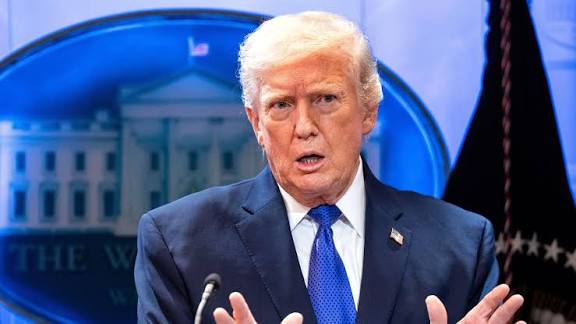
Amid threats from Tehran to target shipping, Donald Trump announced that the U.S. Navy would begin escorting tankers through the Strait of Hormuz if necessary.
The strait — bordered by Iran and Oman — is the only maritime gateway from the Gulf to global markets. Roughly one-fifth of the world’s oil supply passes through it daily, making it one of the most strategically sensitive waterways on Earth.
Trump also instructed the United States International Development Finance Corporation to provide risk insurance and guarantees for maritime trade in the region. While primarily aimed at energy transport, the protection framework is open to all shipping companies.
“No matter what, the United States will ensure the free flow of energy to the world,” Trump said on his Truth Social platform.
Oil and gas prices have surged amid fears of disruption. Even the perception of instability in the Strait of Hormuz historically triggers volatility, as seen during tanker seizures in 2019 and previous regional flare-ups.
Many outlets have focused heavily on the scale of U.S. strikes, highlighting the “2,000 targets” figure as a measure of military intensity. Others emphasize the tanker escort decision as a defensive measure to reassure global markets.
Yet what makes this more complex is the intersection of military escalation and economic signaling.
The escort plan is not simply about protection; it is about deterrence. By visibly committing naval assets, Washington is attempting to dissuade Iran from targeting commercial vessels while calming oil traders and allied governments.
A closer look shows that naval escorts, while stabilizing in the short term, can increase the likelihood of confrontation if vessels are challenged.
The Strait is narrow — at its tightest point just 21 nautical miles wide — leaving little margin for miscalculation. Any direct clash could disrupt global energy supply chains, particularly affecting major oil producers along the Gulf, including Saudi Arabia, Iraq, Kuwait, Qatar, Bahrain and the United Arab Emirates.
Shipping insurance premiums are already rising, and smaller carriers may reconsider routes if tensions intensify.
Some reports frame the development as a show of strength by Washington. Others focus on the threat to global energy markets.
Advertisement
What is often underplayed is the broader geopolitical implication: the U.S. is attempting to simultaneously conduct sustained air operations inside Iran while preventing a maritime crisis that could alienate energy-dependent allies in Europe and Asia.
That balancing act is delicate. Military superiority in airstrikes does not automatically translate into control over asymmetric responses at sea.
Energy markets are deeply sensitive to Gulf disruptions. Past blockades or even threats of closure have pushed crude prices sharply higher within days.
Beyond oil, the Strait also handles liquefied natural gas shipments — critical for European energy diversification efforts in recent years.
If shipping lanes remain open under U.S. escort, price spikes may stabilize. If maritime confrontations occur, the impact could ripple across inflation rates, transportation costs and food supply chains worldwide.
You must log in to comment or reply.
Comments