
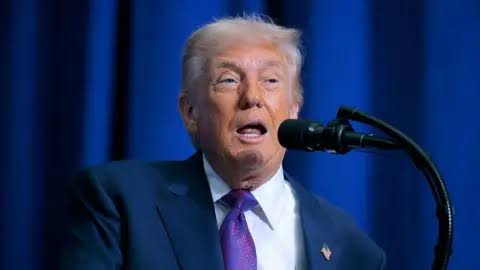
The Supreme Court ruled that Trump exceeded his authority when he invoked the International Emergency Economic Powers Act (IEEPA) to impose wide-ranging tariffs on imports from multiple U.S. trading partners.
In the majority opinion authored by Chief Justice John Roberts, the court concluded that the president failed to show clear congressional authorization for tariffs of such economic magnitude.
The justices relied heavily on the “major questions doctrine,” which requires explicit approval from Congress when executive actions carry vast political and economic consequences.
The decision effectively nullifies the tariff program introduced on April 2 — a date Trump had branded “Liberation Day.”
This ruling is not just about tariffs.
It is about who controls America’s economic power during a crisis.
Here’s the deeper issue:
Advertisement
• If presidents can declare emergencies and impose sweeping economic rules without Congress, the balance of power shifts dramatically.
• The court is signaling that emergency powers cannot become a shortcut for major economic decisions.
• This decision could limit how future presidents — Republican or Democrat — use crisis laws to reshape trade, climate, or financial policy.
In simple terms:
The court just drew a line around how far a president can go without Congress.
That line may now define future economic battles in Washington.
Data and Analysis
• The International Emergency Economic Powers Act (1977) was originally designed to address national security threats, not broad trade restructuring.
• The U.S. Constitution gives Congress authority over tariffs and trade policy.
• In recent years, the Supreme Court has increasingly applied the major questions doctrine to restrict executive power in cases involving climate policy, student debt relief, and workplace mandates.
• Tariffs imposed during Trump’s earlier presidency affected hundreds of billions of dollars in trade and were estimated to increase costs for American importers and consumers.
This ruling continues a trend of the court narrowing executive authority in economically significant matters.
The real test now is how the White House responds.
Here are four things to watch:
Advertisement
• Will lawmakers move to clarify or expand presidential trade authority?
• Investors and global partners may recalibrate expectations for U.S. trade stability.
• Presidents may become more cautious in invoking crisis laws for economic policy.
• The ruling could become a campaign issue, reshaping debates over executive power and economic nationalism.
The bigger risk is institutional tension:
If presidents feel constrained, they may seek alternative legal pathways — potentially triggering more constitutional clashes.
You must log in to comment or reply.
Comments