
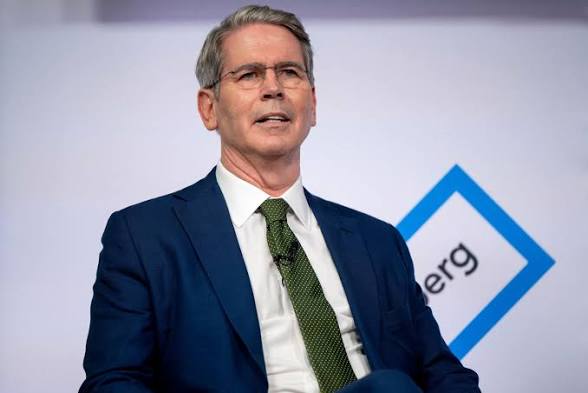
The United States is weighing a tactical lift of sanctions on Iranian crude already at sea, a move aimed at curbing a surge in global fuel prices triggered by escalating Middle East conflict. Treasury Secretary Scott Bessent signaled that Washington may also release additional oil from its Strategic Petroleum Reserve, underscoring the urgency of stabilizing energy markets under unprecedented geopolitical strain.
On March 19, 2026, U.S. Treasury Secretary Scott Bessent confirmed that Washington may temporarily “unsanction” Iranian oil that is already en route to buyers, a measure designed to ease disruptions in global supply. This announcement comes as the Middle East faces mounting energy instability: Iranian strikes on Qatar’s liquefied natural gas infrastructure and ongoing tensions in the Strait of Hormuz have constricted flows of roughly one-fifth of the world’s oil and LNG. Concurrently, Brent crude briefly surged 10 % before settling around $112.76 per barrel. The Treasury also indicated that more oil from the U.S. Strategic Petroleum Reserve could be released to counter price spikes.
Beyond immediate market relief, this move exposes structural vulnerabilities in global energy governance. Reliance on a volatile region, where military strikes can halt nearly 20 % of world crude flows, highlights the fragility of energy supply chains. Economies in Europe, Asia, and Africa are exposed to price shocks, and for emerging markets like Nigeria, this translates directly into higher fuel prices, inflationary pressures, and potential economic slowdowns.
Advertisement
Moreover, temporary unsanctioning demonstrates the tension between geopolitical strategy and market pragmatism: Washington is balancing sanctions enforcement with short-term economic consequences, reflecting a policy toolset increasingly reactive to crises rather than proactive long-term planning.
The Strait of Hormuz channels roughly 20 percent of the world’s crude oil and liquefied natural gas, meaning any disruption reverberates far beyond the region, placing disproportionate pressure on global supply. In response to such shocks, the United States has historically deployed its Strategic Petroleum Reserve, most recently in 2011 and 2022, and the current plan mirrors these tactical interventions. Brent crude prices have climbed between 5 and 10 percent in recent days, reflecting a combination of constrained supply and speculative market pressures. Compounding the situation, Iranian attacks on liquefied natural gas facilities in Qatar are expected to reduce output for three to five years, according to QatarEnergy, heightening the urgency of emergency measures to stabilize energy flows.
The question is whether these tactical moves can stabilize global energy markets without intensifying geopolitical tensions. A greater risk is that short-term interventions, while easing immediate price pressures, could create a precedent that leaves markets exposed to renewed volatility if critical infrastructure remains vulnerable or diplomatic negotiations falter. The path forward — including coordination of international sanctions, protection of key shipping lanes, and strategic reserve management — will ultimately determine whether this energy shock remains a temporary ripple or evolves into a sustained global economic challenge.
You must log in to comment or reply.
Comments