
A war declared “nearly complete” is still unfolding in real time. As Donald Trump promises a swift finish to the US campaign against Iran, missiles continue to hit Israel and global oil prices are climbing—raising urgent questions about whether the conflict is stabilizing or entering a more volatile phase.
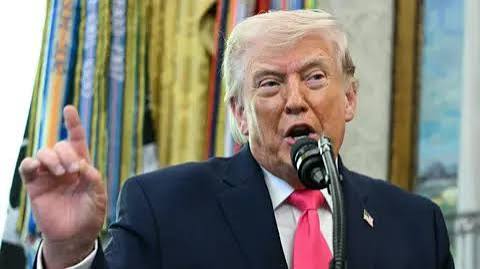
On April 2, 2026, Trump addressed Americans from the White House, insisting that core military objectives had largely been achieved and that the war could be concluded within weeks. He paired that optimism with a warning: the United States would intensify strikes in the short term, including potential attacks on critical infrastructure if Iran refuses to negotiate. The conflict, which began on February 28 with joint US-Israeli strikes, has already redrawn regional dynamics and triggered retaliatory actions across multiple fronts.
However, a closer look shows a widening gap between political messaging and battlefield reality. Within hours of Trump’s remarks, Israeli defence systems were again activated in response to Iranian missile launches. Reports confirmed injuries and damage in central areas, reinforcing that hostilities remain active despite claims of nearing resolution. Iran has also maintained pressure beyond Israel, leveraging its influence across allied groups and strategic locations.
Advertisement
How this moment is being framed varies sharply across major outlets. Reuters emphasizes the lack of a clear exit strategy, noting that while Washington speaks of progress, officials have not outlined how the war will definitively end. BBC News, on the other hand, focuses on the geopolitical uncertainty—highlighting fractures among Western allies and the absence of coordinated diplomacy. Nigerian outlets like Punch Newspapers and Vanguard News capture the immediacy of Trump’s rhetoric and the visible escalation but devote less attention to the longer-term strategic ambiguity now shaping global reactions.
Yet the deeper issue is not whether the war is close to ending, but what “ending” actually means in this context. Iran’s continued missile capability, combined with its control over the Strait of Hormuz, suggests that its leverage remains intact. Roughly a fifth of the world’s oil passes through this corridor, and even partial disruption has already pushed prices above $100 per barrel. For economies like Nigeria, where fuel costs directly influence inflation, transport, and food prices, the ripple effects are immediate. A prolonged conflict could tighten global supply further, undermining recent efforts to stabilize domestic fuel markets.
What makes this more complex is the contradiction between military escalation and diplomatic silence. While Trump has suggested Iran may be open to talks, Tehran has publicly rejected such claims, describing US conditions as unrealistic. This disconnect underscores a broader pattern seen in past conflicts, where public narratives often diverge from backchannel realities—if such channels exist at all.
Historically, wars framed as being in their “final phase” rarely conclude on political timelines. From Iraq to Afghanistan, declarations of imminent victory have often preceded prolonged instability. Current trends—continued missile exchanges, rising oil volatility, and expanding regional involvement including groups like Hezbollah—point to a conflict that may be evolving rather than concluding.
Advertisement
What ultimately matters is no longer the rhetoric, but the reality on the ground. If missile exchanges continue and critical oil routes remain under pressure, the fallout will extend well beyond the Middle East, tightening economic and geopolitical strains globally. The next moves by Washington and Tehran—whether they choose to escalate, negotiate, or pause—will shape whether the conflict gradually subsides or evolves into a defining crisis for global stability in the months ahead.
You must log in to comment or reply.
Comments