
A night meant to celebrate press freedom in the United States was abruptly disrupted by gunfire, forcing the evacuation of top officials and raising fresh concerns about security at high-profile political events. The incident, which unfolded in Washington, D.C., has quickly escalated into a federal case with wider implications for national security.
On Saturday night, during the annual White House Correspondents’ Dinner held at the Washington Hilton, gunshots were reported near the main security screening area where hundreds of journalists, politicians, and dignitaries had gathered.
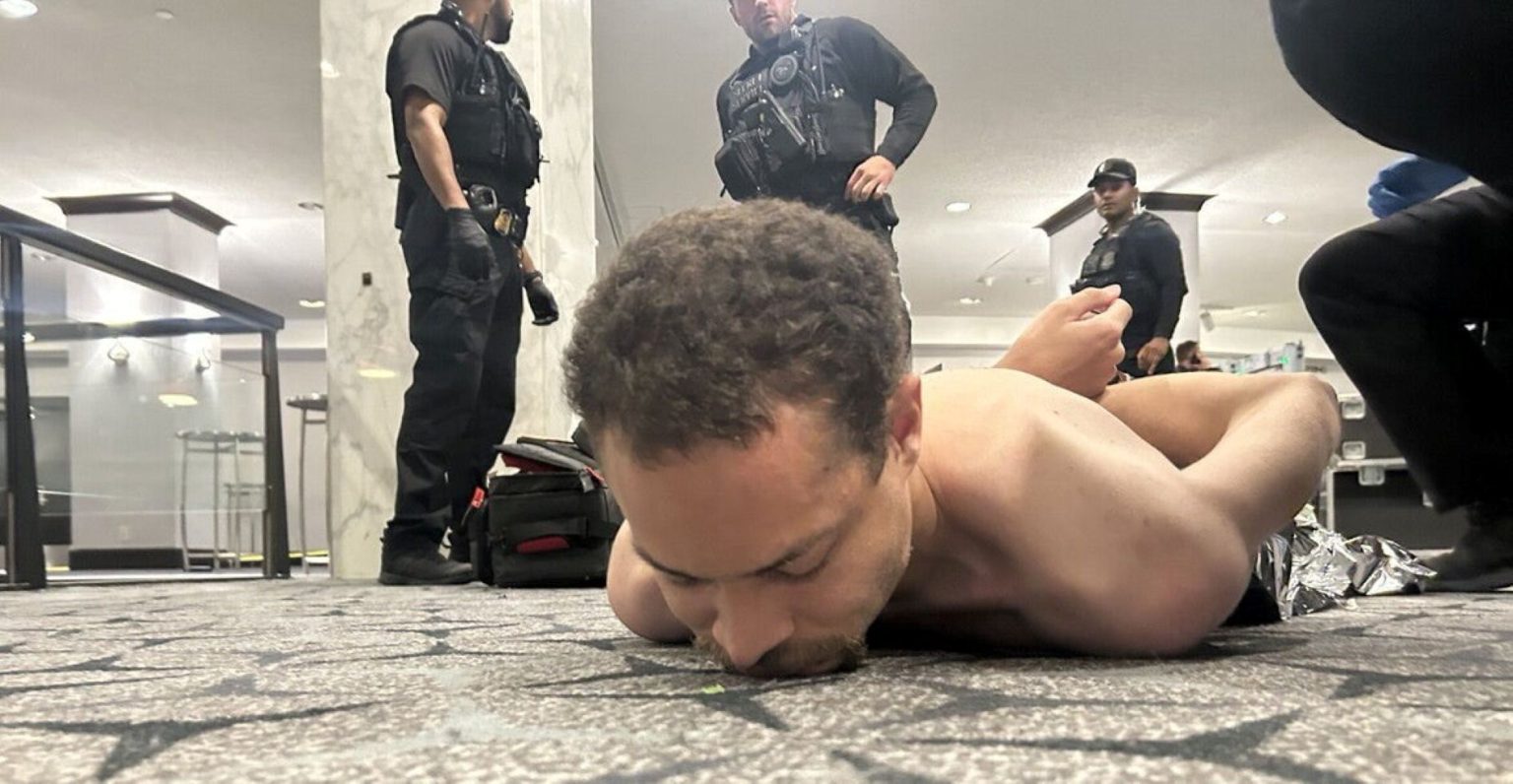
According to the United States Secret Service, a suspect was swiftly taken into custody following the shooting scare. The agency confirmed that Donald Trump and the First Lady were unharmed.
“The president and first lady are safe along with all protectees,” the Secret Service said in a statement, adding that investigations are ongoing with local law enforcement.
Witnesses described hearing what sounded like gunshots shortly after 8:30 p.m., triggering panic as attendees fled the ballroom. Security operatives quickly evacuated senior officials, including Vice President J.D. Vance and members of the cabinet, while voices at the venue urged guests to “stay down.”
Video footage circulating online showed agents clearing the stage and escorting dignitaries to safety within seconds of the incident.
Shortly after, Trump praised the response:
Advertisement
“Secret Service and law enforcement did a fantastic job. They acted quickly and bravely. The shooter has been apprehended.”
He added that although he initially suggested the event continue, security agencies would make the final decision, as the programme had been significantly disrupted.
Authorities have since moved to formalise the case. The U.S. Attorney for Washington, Jeanine Pirro, confirmed the suspect is facing federal charges.
“Right now, the defendant is being charged with two counts, 924C, using a firearm during a crime of violence, and a second crime under 111, which is assault on a federal officer using a dangerous weapon,” she said.
Pirro revealed that a Uniformed Secret Service officer was shot during the incident but is expected to recover:
“Fortunately he is doing all right and he will be fine.”
The suspect, identified by U.S. media as 31-year-old Cole Tomas Allen from California, was reportedly armed with multiple weapons, including a shotgun, a handgun, and several knives. Interim Metropolitan Police Chief Jeffery W Carroll confirmed the scale of the threat:
“He was armed with a shotgun, a handgun, and multiple knives.”
Officials believe the suspect attempted to move toward the ballroom where thousands were gathered, but was stopped at the security checkpoint—an intervention that likely prevented mass casualties.
Meanwhile, U.S. Attorney General Todd Blanche said the suspect would be formally charged “very soon,” adding that he remains in custody while receiving medical treatment.
Beyond the immediate shock, the incident underscores a persistent vulnerability in even the most heavily guarded environments. While officials insist there is no ongoing threat, the breach raises questions about perimeter security and threat detection protocols.
What makes this more complex is the symbolic nature of the event itself. The White House Correspondents’ Dinner is not just a social gathering—it represents the intersection of political power and media accountability. An attack in such a setting carries both security and democratic implications.
Advertisement
The situation also echoes historical precedent. The same venue, the Washington Hilton, is etched in U.S. history as the site of the attempted assassination of President Ronald Reagan in 1981. That parallel has resurfaced in current discourse, reinforcing concerns about recurring security risks tied to high-profile events.
The United States has seen a steady rise in security threats targeting political figures and public gatherings in recent years. Incidents like this amplify pressure on federal agencies to reassess protective strategies, particularly as political tensions remain high ahead of future elections.
For global observers—including in countries like Nigeria—the episode highlights how even advanced security systems can face unpredictable threats. It also reinforces the importance of layered security approaches for major public and political events.
Organisers have indicated that the dinner may be rescheduled within 30 days, while investigations continue into the suspect’s motive.
The real test now is whether authorities can convincingly explain how such a heavily armed individual reached a high-security checkpoint—and what changes will follow. The answers will shape not just future editions of the event, but broader confidence in the security of political institutions.
You must log in to comment or reply.
Comments