
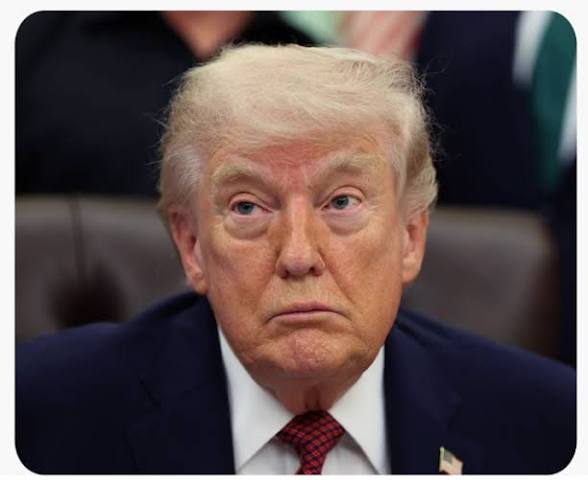
A security breach at one of Washington’s most high-profile political gatherings has collided with an already tense geopolitical moment, as Donald Trump insists the incident will not alter U.S. military strategy against Iran. Verified reporting across major international platforms confirms both the shooting and the president’s remarks—but also underscores a critical gap between political framing and established facts.
Following the shooting near the White House Correspondents’ Dinner in Washington, D.C., Trump told reporters at the White House:
“It’s not going to deter me from winning the war in Iran. I don’t know if that had anything to do with it, I really don’t think so, based on what we know.”
He added earlier:
Advertisement
“You never know,”
while describing the attacker as a “lone wolf” and confirming that investigators are still working to determine motive.
The incident unfolded at the Washington Hilton, where gunfire near a security checkpoint triggered panic among journalists, politicians, and invited guests. The United States Secret Service confirmed that Trump and other senior officials were safely evacuated and that a suspect was taken into custody.
Trump’s insistence that the incident will not “deter” U.S. war efforts illustrates how quickly domestic events can be absorbed into broader geopolitical messaging. However, the evidence so far does not support any direct link between the shooting and the Iran conflict.
Yet the deeper issue lies in how such narratives shape perception. When a domestic security incident is even loosely tied to an ongoing war, it can shift public sentiment and potentially influence policy posture—regardless of whether intelligence supports that link.
At the same time, confirmed reports that the U.S. has canceled diplomatic engagement linked to Iran—particularly envoys’ travel to Pakistan—point to a real shift in strategy. Combined with growing pressure around Iranian interests, including maritime tensions, the broader trajectory suggests escalation independent of the shooting itself.
The U.S.-Iran relationship has historically moved in cycles of confrontation and negotiation. The current phase—marked by prolonged hostilities and stalled diplomacy—represents one of the more volatile periods in recent years.
Advertisement
For global economies, including Nigeria’s, the stakes are tangible. Any escalation in the Gulf region could disrupt oil supply chains, influence global crude prices, and intensify domestic inflation pressures, particularly in transport and energy-dependent sectors.
This makes the distinction between confirmed threats and political framing especially critical for policymakers and markets alike.
Investigations into the shooting remain ongoing, with authorities focused on motive and confirming whether the suspect acted alone. Security agencies continue to stress that there is no ongoing threat.
You must log in to comment or reply.
Comments