
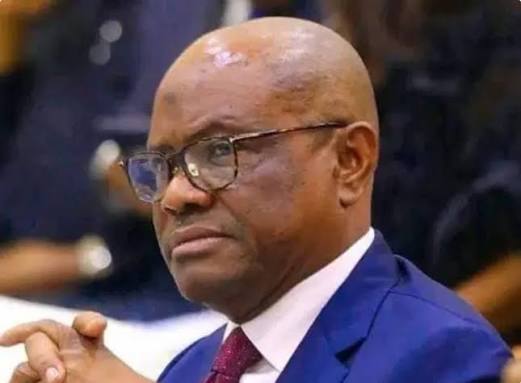
Tensions within Nigeria’s political landscape intensified on Thursday as Nyesom Wike openly challenged the presidential ambition of Atiku Abubakar, signaling a widening crack in the opposition ahead of the 2027 elections.
The exchange goes beyond personal criticism, reflecting a broader struggle over political relevance, coalition strength, and control of Nigeria’s opposition space.
On April 16, 2026, during an inspection of infrastructure projects across Abuja, Wike—Minister of the Federal Capital Territory—dismissed Atiku’s criticism of the administration of Bola Tinubu.
Atiku had earlier argued in a televised interview that the current government had failed to ease economic hardship across the country.
Advertisement
Responding, Wike defended ongoing development efforts in the FCT, insisting visible changes contradict claims of underperformance. He also questioned Atiku’s political record and declared that the 2027 presidency would not be within his reach, while encouraging him to continue contesting elections if he chooses.
Wike’s remarks reflect more than a reaction to criticism—they point to an ongoing recalibration within Nigeria’s opposition.
Beyond the official statements, the deeper issue is the fragmentation of opposition forces. Discussions around a possible coalition involving figures such as Peter Obi, Rabiu Kwankwaso, and Nasir El-Rufai have raised expectations of a stronger challenge to the ruling party. Yet skepticism remains about whether such alliances can translate into electoral success.
Wike’s dismissal of these alliances highlights a recurring concern in Nigerian politics: coalition strength often struggles at the grassroots level, where elections are ultimately decided. His reference to past electoral outcomes in the FCT underscores doubts about the organizational capacity of emerging political blocs.
What makes this more complex is the economic backdrop. With inflationary pressures and cost-of-living concerns affecting households across cities like Abuja and Lagos, political messaging is increasingly tied to real-life economic experiences. Competing narratives—whether of progress or hardship—are likely to shape voter sentiment more than party rhetoric alone.
Nigeria’s political history shows that internal divisions within opposition parties often weaken their electoral prospects. Similar patterns were evident in previous election cycles, where fragmented alliances struggled to present a unified front against incumbents.
Since the 2023 elections, shifts in party loyalty and emerging political coalitions have continued to redefine the landscape. Current developments suggest that the contest for 2027 may depend as much on internal cohesion as on public support.
Advertisement
The immediate exchange between Wike and Atiku may appear routine, but it signals the early stages of a high-stakes political contest.
The real concern now is whether opposition leaders can move beyond internal rivalries to build a cohesive strategy capable of challenging the ruling party. At the same time, the government’s ability to address economic concerns will play a decisive role in shaping public perception.
What unfolds in the coming months will determine whether these tensions evolve into a fragmented opposition or a reconfigured political force ahead of 2027.
You must log in to comment or reply.
Comments