
"When a nation forgets to honour its capital, it forgets a part of itself.”
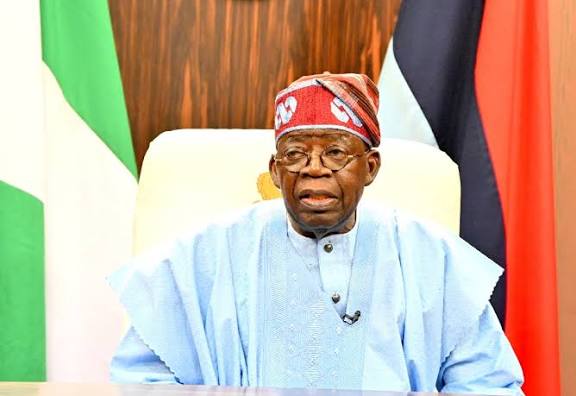
President Bola Ahmed Tinubu and the Minister of the Federal Capital Territory (FCT), Nyesom Wike, have come under intense public criticism for their apparent neglect of Abuja’s 50th anniversary. This omission has drawn sharper attention given that seven other states created on February 3, 1976, commemorated their golden jubilee with elaborate celebrations.
By constitutional provision, President Tinubu serves as the governor of the FCT, with administrative authority delegated to the FCT Minister. Against this backdrop, the subdued passage of Abuja’s landmark 50th anniversary has generated widespread disappointment and anger among residents and indigenous communities, many of whom feel increasingly marginalised and excluded from the capital’s development. These communities continue to demand recognition of their rights, compensation for ancestral lands, and more inclusive governance.
The controversy deepened after Minister Wike explained that the decision not to hold extensive celebrations was tied to plans to merge Abuja’s golden jubilee with activities marking President Tinubu’s third year in office. According to the Minister, the FCT Administration intends to celebrate Abuja at 50 during the President’s anniversary, focusing largely on completed and ongoing infrastructure projects.
Advertisement
Providing further justification, Wike disclosed that a committee would soon be inaugurated to plan both events and that a commemorative publication would be unveiled within three months. He argued that many of the infrastructure achievements recorded in the FCT over the past two and a half years were made possible by President Tinubu’s decision to remove the territory from the Treasury Single Account (TSA), thereby enabling access to commercial funding. According to him, this policy shift unlocked financing for large-scale, life-impacting projects across the capital.
The Minister further noted that beyond infrastructure, workers in the FCT Administration had experienced significant career advancements under the current administration, including opportunities to rise to the positions of Permanent Secretary and Head of the FCT Civil Service—developments he attributed solely to President Tinubu’s leadership.
Similarly, the Acting Executive Secretary of the Federal Capital Development Authority (FCDA), Richard Dauda, praised what he described as unprecedented infrastructural achievements within the last two and a half years, claiming they surpassed developments recorded in the FCT’s entire 50-year history. He stated that numerous inherited projects had either been completed or significantly advanced under the current administration. Dauda revealed that nine projects were inaugurated during Tinubu’s first anniversary in office and 17 during the second, with projections suggesting that up to 50 projects may be inaugurated by the third anniversary.
Despite these claims, critics argue that the administration’s emphasis on infrastructure masks deeper governance challenges, including uneven development, labour unrest, and gaps in service delivery. They contend that Abuja’s founding vision as a symbol of national unity, order, and fairness has been weakened by persistent systemic issues—some of which culminated in labour actions suspended only because the anniversary celebration never materialised.
Many commentators insist that President Tinubu, as the FCT’s governor, owes Nigerians an apology for what they describe as a regrettable oversight. They note that former President Olusegun Obasanjo attended Ogun State’s 50th anniversary celebrations, underscoring the expectation that Abuja’s milestone deserved similar national attention. Given Abuja’s historical significance—shaped by leaders such as Generals Yakubu Gowon, Murtala Mohammed, Ibrahim Babangida, and Abdulsalami Abubakar—critics argue that the capital’s golden jubilee should have been honoured with due ceremony and recognition.
Unlike Abuja, the seven states created on the same day commemorated their anniversaries without waiting to align celebrations with presidential milestones. This has further fueled criticism of the FCT Minister’s explanation, which many consider inadequate and unacceptable.
Observers also lament that Abuja’s anniversary was overshadowed by unrelated political engagements, including crisis talks involving Rivers State held at the Presidential Villa on the same day. Critics argue that the Minister should instead have been hosting dignitaries and stakeholders at the International Conference Centre, recalling past milestone celebrations such as the capital’s 30th anniversary in 2006, which featured month-long events and national recognition.
At the heart of the debate is concern that failing to properly mark Abuja’s 50th anniversary risks eroding national memory and diminishing the capital’s historical significance. As the seat of federal power and a symbol of Nigeria’s unity, the FCT occupies a unique constitutional and symbolic position that demands respect beyond routine political calculations. As one commentator put it:
Advertisement
“When a nation forgets to honour its capital, it forgets a part of itself.”
While acknowledging the completion of inherited road projects and ongoing infrastructure works, critics caution against narratives that appear to diminish the contributions of previous administrations. They stress that Abuja’s development is the result of collective efforts spanning nearly five decades and urge that any eventual celebration must honour the legacy of all those who laboured to build the nation’s capital.
In conclusion, many insist that Abuja’s golden jubilee should have been celebrated at the appropriate time and place, free from political overshadowing, to preserve history, honour national achievement, and reaffirm the capital’s central role in Nigeria’s democratic identity.
You must log in to comment or reply.
Comments